

by Ian Mann
May 20, 2026
/ ALBUM
The standard of the writing and playing throughout the series has been exceptional. Cwmwl Tystion really has been a major triumph for Tomos Williams
Tomos Williams
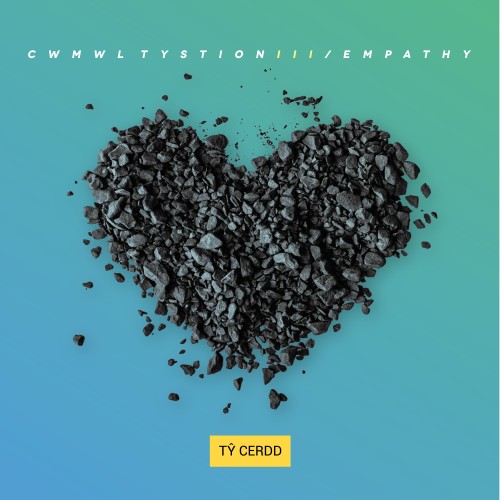
Cwmwl Tystion III / Empathy
(Ty Cerdd TCR062)
Tomos Williams – trumpet. Mared Williams – vocals, Eadyth Crawford – vocals, Nguyen Le – electric guitar, Melvin Gibbs – electric bass, Mark O’Connor – drums, Simon Proffitt – live visuals
“Empathy” is the final instalment in Welsh trumpeter and composer Tomos Williams’ Cwmwl Tystion trilogy, the last in a series of suites of seven movements, with each work exploring different elements of Welsh history and identity.
The title “Cwmwl Tystion” (literally ‘a cloud of witnesses’) is originally Biblical in source and was derived from a poem by the Welsh poet, pacifist and nationalist Waldo Williams (1904-71) called “Beth yw Dyn?” (or “What is Man?”). Cwmwl Tystion has now effectively become a band name.
The Cwmwl Tystion project has been supported by the Arts Council of Wales and by the Cardiff based record label Ty Cerdd, an organisation devoted to supporting all forms of contemporary Welsh music.
“Witness”, the first jazz suite to be written by Williams under the Cwmwl Tystion banner toured Wales in 2019 and the subsequent live recording was released by Ty Cerdd in 2021. The music celebrated the history, culture and landscape of Wales and asked questions regarding Welsh identity, both past and present. The first line up was comprised entirely of Welsh musicians and featured Williams on trumpet alongside Francesca Simmons (violin, saw), Rhodri Davies (harp, electronics) Huw Warren (piano), Huw V Williams (bass) and Mark O’Connor (drums). My review of the first Cwmwl Tystion album can be found here;
https://www.thejazzmann.com/reviews/review/cwmwl-tystion-witness
The second Cwmwl Tystion suite, “Riot!”, was a further examination of Welsh history and politics and again asked pertinent questions with regard to Welsh identity, drawing inspiration from moments of rebellion and civil unrest in Wales in both the 19th and 20th centuries. Like its predecessor it was a seven part suite but featured a very different line up with only Williams and O’Connor remaining from the first band. The new sextet featured two real heavyweights of the British jazz scene, saxophonist and spoken word artist Soweto Kinch and vibraphonist Orphy Robinson, with two Cardiff based musicians, vocalist Eadyth Crawford and bassist Aidan Thorne completing the line up. The “Riot!” suite toured in late 2021 and the subsequent live recording was released by Ty Cerdd in 2023. Review here;
https://www.thejazzmann.com/reviews/review/cwmwl-tystion-ii-riot
The Cwmwl Tystion project was initially intended as a response to Brexit and was influenced by the politically inspired music of leading American jazz musicians such as trumpeters Wadada Leo Smith, Ambrose Akinmusire and Don Cherry and saxophonists Matana Roberts, and John Zorn as Williams explains;
“I had been listening to – and was moved by – a lot of overtly political music by musicians such as Leo Wadada Smith, Ambrose Akinmusire and Matana Roberts. I felt that the time was right for a Welsh contribution to this landscape. I wanted to create a piece that both celebrated and questioned the idea of Welshness and referenced notable events in Welsh history”.
Smith’s long form works and Roberts’ celebrated “Coin Coin” series of recordings represent particularly pertinent reference points.
In addition to his work with Cwmwl Tystion Williams has been a regular presence on the Jazzmann web pages, primarily as the co-leader, with his saxophonist brother Daniel, of the jazz/folk sextet Burum. This band’s albums “Caniadau” (2012), “Llef” (2016) and “Eneidiau” (2022) have all been reviewed elsewhere on this site, as has a live appearance at the 2014 Brecon Jazz Festival.
Williams is also a member of Khamira, which sees a quartet of Welsh jazz musicians, all of them associated with Burum, collaborating with a trio of Indian born musicians to create a unique musical and cultural hybrid of jazz, Indian classical music and Welsh folk. Khamira’s eponymous debut album (2017) and the follow up “Undod / Unity” (2022) are both favourably reviewed elsewhere on this site. As a paying customer I have also enjoyed live performances by the band on different tours at the Borough Theatre in Abergavenny and at the Chapter Arts Centre in Cardiff.
Williams also leads Seven Steps, a jazz quartet dedicated to exploring the music of Miles Davis. His other musical activities include his long term membership of the Welsh folk group Fernhill, and a duo with Welsh triple harpist Llio Rhydderch, with whom he recorded the album “Carn Ingli”.More recently he has been fronting a trumpet led jazz trio featuring Aidan Thorne on double bass and Matt Holmes at the drums.
“Empathy”, the third suite to be written under the Cwmwl Tystion banner features a new, truly international line up with Williams, Crawford and the faithful O’Connor joined by a second Welsh vocalist, Mared Williams, plus two real jazz heavyweights in the shapes of French / Vietnamese guitarist Nguyen Le and American electric bass specialist Melvin Gibbs, With regard to the title of the suite Williams states;
“I used ‘Empathy’ – an English-language title – since that quality is so badly missing in the social and political debates of our time”.
Prior to the 2024 tour Williams said of the “Empathy” line up;
“I first saw Melvin Gibbs perform at the legendary Tonic in New York’s Lower East Side in 2001, and came across his band Harriet Tubman on MySpace (yes! MySpace!) a few years later. Harriet Tubman and their avant- rock political music have been a direct influence on the creation of “Cwmwl Tystion” so to have Melvin agree to come to Wales and participate in this final instalment is incredible and a real privilege. No one else plays the electric bass quite like him.
While I’ve also followed Nguyên Lê‘s career for decades, having seen him perform numerous times with Trilok Gurtu at the Brecon Jazz Festival and Tommy Smith and Kenny Wheeler to name a few. He’ll bring his fusion chops and world-jazz aesthetic to the music. Interestingly, Melvin and Nguyên have never performed together, so this will be a world first on Welsh soil.
Mared and Eadyth are also two of the leading lights in a new generation of Welsh vocalists, who are fearless creators. Eadyth was a member of the “Cwmwl Tystion II / Riot!” band while Mark O’Connor on drums and Simon Proffitt on live visuals have been involved in all three Cwmwl Tystion bands.”
He has described the “Empathy” line-up as “an augmented power trio” with the rhythmic core of Le, Gibbs and O’Connor supplemented by his own trumpet, the voices of the two singers and in live performance Proffitt’s live visuals.
The “Empathy” band toured in the UK in the summer of 2024, playing mainly in Wales but with one date at Cafe Oto in London. I was fortunate enough to witness a live performance at The Lost Arc in Rhayader, which is reviewed elsewhere on this site, my account of that occasion providing the basis for much of the biographical detail above.
This live album was compiled from recordings from three different tour venues, The Lost Arc, Cafe Oto and Theatr Soar in Merthyr Tydfil.
All of the individual pieces in the “Cwmwl Tystion” series have a pertinent story behind them. The Empathy Suite commences with “Welsh Not”, a piece that harks back to the first Cwmwl Tystion suite and the movement titled “Lyfrau Gleision” or “Blue Books”. This referenced the three volume Parliamentary Report of 1847 that actively discouraged the use of the Welsh language and of the teaching of it in schools. Signs instructing pupils to “Welsh Not” became a familiar sight in Welsh classrooms and I recall seeing such an object on display in Brecon Museum. Also a wooden plaque engraved with the letters WN was used as a deterrent to prevent children speaking Welsh. During the school day it would be passed from pupil to pupil and the child holding it at the end of the day would be physically punished. These “Welsh Not” signs and plaques remain a symbol of cultural oppression.
The music begins with what Williams describes as “a brief atonal introduction”, led by Le’s guitar and featuring the soaring vocals of Mared and Crawford, which I like to think of as voices that refuse to be silenced. The “augmented power trio” then kicks in as a groove is established, overall it’s a more obviously ‘heavy’ sound than on the previous “Cwmwl Tystion” albums. This groove acts as the foundation for Williams’ trumpet soloing, with Le following suit with a searing, rock influenced guitar solo that combines considerable complexity with raw power. The music then breaks down into a ‘free jazz’ dialogue between Gibbs on electric bass and Williams on trumpet, the latter sometimes muted. Gibbs then establishes a slower, but still menacing groove, topped first by brooding wordless vocals and then by Le’s guitar ruminations as the pieces segue into the next movement, “Streic y Glowyr 1984” or “Miner’s Strike 1984”.
Williams describes this second movement as “a minor blues”, I suspect that the pun is not intended, for in his album liner notes he laments the ultimate failure of the strike and the unemployment, poverty and social deprivation that stemmed from it, effects still evident today. The leader’s trumpet is allied to soaring wordless vocals while Le unleashes another powerful guitar solo, packed with a smouldering intensity. An extended passage of electronically enhanced solo electric bass from Gibbs then concludes this episode.
Beth yw maddau? / What is forgiving?” takes its title from a line in the Waldo Williams poem Beth yw Dyn?” (or “What is Man?”), that helped to give the band its name. This movement commences with a beautiful vocal duet as Mared Williams and Crawford sing the Welsh folk song “Dod dy law” (“Place your hand”), unaccompanied at first but later with their voices augmented by Le’s guitar soundscaping. Subsequently Tomos Williams delivers a muted trumpet solo that embraces a Miles Davis like beauty and fragility. Crawford then “deconstructs” another Welsh folk song “Hiraeth”, aided by the sounds of electric bass, guitar atmospherics and O’Connor’s drum punctuation and commentary.
Williams describes “Aberfan 1966” as being the “the centrepiece of the Empathy suite”. The piece is presented as “a tribute to the 144 people who died on the morning of Friday 21 October 1966. After heavy rain, a colliery slag tip began to slide down the hillside, crashing into Aberfan, destroying 18 houses and engulfing Pantglas Junior School. 116 children were killed in the disaster, which left deep psychological scars both on the survivors and the wider community”.
The movement commences with a recording of a congregation singing the Welsh hymn, ’Llef’. Gibbs’ electric bass is then introduced, subsequently heavily distorted via the use of a fuzz pedal. It then forms part of the sonic backdrop underpinning Crawford’s haunting singing of the Welsh folk song “Can y Colier” (“The Miner’s Song”). Her vocals then combine dramatically with Le’s guitar before the latter delivers an excoriating guitar solo supported by the rumble of bass and drums.
The Afro- American singer, actor and activist Paul Robeson established strong cultural links with Wales and particularly so with the mining community. On “Witness”, the first Cwmwl Tystion album Williams celebrated these ties on “Paul Robeson ac Eisteddfod y Glowyr 1957”. The piece references the occasion that Robeson addressed the 1957 Miner’s Eisteddfod in Porthcawl. As a political activist he had already established strong ties with the Welsh mining community and was sympathetic to their struggle. At this time, with McCarthyism rampant in America, Robeson had been blacklisted and his passport confiscated, thus he spoke and sang to his Welsh comrades via an international telephone line from the US.
There’s a further celebration of Robeson on “Empathy” with “Paul Robeson sings in Mountain Ash 1938”, which commemorates Robeson’s performance in Mountain Ash at a memorial concert for the thirty three Welshmen who died fighting for the International Brigades in the Spanish Civil War. Mared Williams sings “Dafydd y Garreg Wen”, a Welsh folk tune that Robeson sung in English in 1938, her Welsh language vocals beautifully accompanied by Le’s guitar. Gibbs then establishes what Williams describes as a “Phrygian groove”, which is intended to introduce a Spanish flavour. Williams solos on trumpet, soaring gracefully above the rhythms. The ‘power trio’ then takes over as Le launches another fusillade of near heavy metal guitar pyrotechnics, accompanied by Gibbs’ rumbling bass and O’Connor’s dynamic drumming. It’s music that gives contemporary expression to the clamour and political unrest of the 1930s. O’Connor’s drum feature provides the link into a reprise of the Welsh folk tune “Hiraeth”, previously heard vocally but now presented as a haunting trumpet and drum duet.
“Mynydd Epynt 1940” is named for the mountainous region of Powys that was requisitioned by the Ministry of Defence for training purposes during the Second World War. The two hundred people that were displaced, including farmers, shepherds and their families have never been able to return and the land is still in the possession of the British army to this day. It should be noted that this wasn’t solely a Welsh issue. The Dorset village of Tyneham suffered a similar fate just prior to D-Day and has never been resettled. Introduced by Gibbs’ bass and with Crawford singing emotively this atmospheric piece has the feel of a lament but it sounds a note of defiance too as the music gradually becomes more powerful with Le delivering another scorching guitar solo.
The album concludes with “Cymru; Cenedl Noddfa” or “Wales: A Nation of Sanctuary”. Williams says of this final movement;
“Wales: A Nation of Sanctuary is the Welsh Government’s official policy, and represents a vision of Wales as the world’s first ‘Nation of Sanctuary’ for refugees and asylum seekers, which aims to create a welcoming and inclusive environment for those fleeing persecution and war. For me Wales: A Nation of Sanctuary is an optimistic note upon which to end the entire Cwmwl Tystion trilogy, despite the policy coming under fire recently from reactionary right-wing elements. Wales: A Nation of Sanctuary is a positive representation of Wales in the world, signifying the internationalism at the heart of the Cwmwl Tystion trilogy.”
The title phrase is sung, in Welsh, by the two vocalists in unison. The leader’s trumpet also plays a prominent part in the arrangement before Le unleashes another powerful guitar solo. The folk song “Hiraeth” appears for a third time, beautifully sung by Mared Williams, before the performance concludes with an improvised passage of solo electric bass from Gibbs.
If this is to be the final work in the Cwmwl Tystion series then it’s going out on a high. The standard of the writing and playing throughout the series has been exceptional. Cwmwl Tystion really has been a major triumph for Tomos Williams and the comparisons with the works of Wadada Leo Smith and Matana Roberts are more than justified. It certainly represented a considerable coup for Williams to get Gibbs and Le on board and it’s immediately obvious that both bought fully into the project with each delivering brilliant instrumental performances. Williams himself has rarely played better while O’Connor and the twin vocalists also make superb contributions.
The spirit of Cwmwl Tystion looks set to continue with Williams’ latest project Blodeugerdd’ or “The Great Welsh Songbook”, which “reimagines Welsh folk traditions through a contemporary jazz lens”. O’Connor and Crawford both feature as part of a line up that also includes pianist Huw Warren, saxophonist Rachel Musson and bassist Paula Gardiner. This ensemble is scheduled to appear at the 2026 Brecon Jazz Festival.
In the meantime I’m also looking forward to seeing Williams fronting his Miles Davis themed Seven Steps project at Black Mountain Jazz in Abergavenny on 31st May 2026.
blog comments powered by Disqus