

by Ian Mann
February 05, 2026
/ LIVE
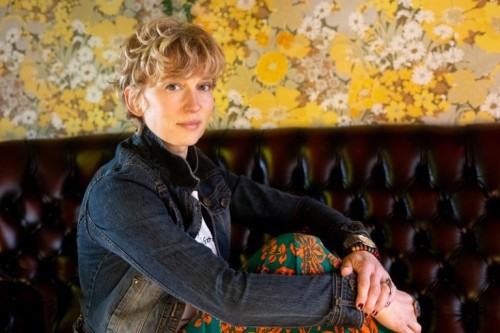
Undeterred by the awful weather, a packed house enjoyed the compelling original music of the Josephine Davies Satori quartet. The band played as a whole, and the music flowed seamlessly.
Jazz at Progress
January 30 2026
Josephine Davies: Satori
悟り
Josephine Davies tenor & soprano saxophones, composer
Alcyona Mick piano
Dave Whitford bass
Jay Davies drums
“During the year…I experienced … a spiritual awakening…” explained John Coltrane, about his celebrated jazz suite, “A Love Supreme”. Spirituality has been important in the work of many jazz artists. And there were many references to it in this evening’s concert.
Undeterred by the awful weather, a packed house enjoyed the compelling music (all original compositions) of the Josephine Davies quartet.
Satori (Japanese for Enlightenment) started the evening with “Unwrite”, a piece written to commemorate female ancestry, and family writings. In this number, as throughout the concert, the band played with a shifting pulse, and changing textures. An opening tenor statement took us into virtuoso ensemble playing, with repeated figures, and varying rhythms.
“The Everywhen” (a literary term for ‘always’) was written during lockdown. Neglected since then, it was re-invigorated just in time for this evening. The piano introduction led into a soprano saxophone passage of figures cascading down from the upper register. The composition has a relaxed feeling, and gave us a thoughtful ‘conversation’ between saxophone and piano.
“Saxa Vord”, inspired by Josephine’s birthplace in Shetland, changed the pace into a faster tempo, with a Latin feel, and again featured soprano saxophone. The collective sound suggested some exotic scales. The tempo would shift gear from slow into mid-tempo, and change again. Alcyona’s piano solo employed repeated rhythmic motifs, varying dynamics, and a sense of intensity.
A ballad, “Hiraeth” (a Welsh term for longing or nostalgia for a place or one’s home) was introduced on tenor. It is a very lyrical melody, and is set on the tenor range so as to give attractive higher register peaks. A contemplative bass improvisation followed the theme statement, before a piano solo. The piece concluded with a bluesy section on a rock rhythm, and concluded with a spirited saxophone cadenza.
The first set closed with “Mudita” (Sanskrit for joy or bliss) – previously recorded on a trio album. The piece is a superb re-interpretation of the early music of Ornette Coleman. Highlights included a fast unison bass and tenor passage, and an up-tempo unaccompanied tenor solo. The melody captured the ‘folksy’ diatonic character of the Coleman numbers of the 1960’s. An ingenious arrangement made full use of the many different combinations of voices in the band.
Another Shetland-inspired composition, “Hamar” (a headland in Britain’s northernmost island) started the second set. A repeated bass figure from Dave Whitford took us into a number reminiscent of the classical cadences of Enrique Granados.
Josephine’s music has been described as ‘challenging’. There is some truth in this, in that rhythms change, as do tempos, and the soundscape is full of surprises: you think you know where we’re going, but then you’re wrong. We’re in a different world from the ‘theme, solos, theme restatement’ structure. But following the logic of the music can be intriguing for the listener. (Or, you can simply sit back and enjoy it!)
Beginning with low register tenor and drums, “In the Corner of Clouds” comes from the album of the same name. A tenor statement in the lower register, expressed with gentle articulation opened the piece, before bass, and then Jay Davies joined. (On each composition of the evening, the sound palette of the tenor was explored: articulation, range, dynamics, vibrato, and timbre).
“Duhka” (a Sanskrit word meaning suffering or dissatisfaction) began with a strident bass figure. The band joined, and a tenor theme making use of growls and varied articulation followed. We heard a vigorous bass and tenor line, before piano. Alcyona’s improvisation was percussive, encompassing fast passages and ambiguous rhythms. Her conception recalls the great innovator Cecil Taylor, but is more tonal and well attuned to the ensemble. The number became quieter, and then a repeating bass and tenor line built intensity, before a defined stop.
A self-explanatory title, “Big Band Middle Bit” (but ‘probably will change’, explained Josephine), had been devised from a section of an earlier big-band composition. A slow ballad, it was stated soulfully on tenor, in a high register that created a wistful atmosphere. An inventive bass solo from Dave Whitford, and a mesmerising saxophone solo continued until the piece ended with sustained tones.
Receiving its first public performance, “In Cupped Hands” describes a melody that “floated in front of me” (“it was like trying to grasp water in your hands”, explained Josephine). The mood seemed to switch between rather sad, and cheerful, as did the harmonic basis from eastern-sounding scales to more conventional territory. Could you detect a “Love Supreme” type figure in the final interplay between tenor and drums?
“The Hols o’ Scraada” are a series of sea caves, a geological feature in Shetland. We heard several unison duets lines, some ‘ghostly’ timbre tenor sounds, tempo changes, and percussive, fragmented piano lines.
For those who prefer not to applaud after a solo, lest it obscure the next player, Satori’s music is ideal: a solo merges into an ensemble passage, or a duet. The band is playing as a whole, and the music flows seamlessly.
“Hols o’ Scraada” came to a clean stop, the Progress applauded; the music resumed with a bluesy number, and a piano solo, then quietened, as Josephine re-introduced the band, warmly thanking the audience and the Progress volunteers.
With appreciation to hosts the Progress theatre, and their volunteers, who make live jazz in “Jazz at Progress” possible.
CLIVE DOWNS