

by Ian Mann
August 26, 2026
/ ALBUM
Finds Mulelid honing his approach to the solo piano format. A frequently beautiful album that has the potential to appeal to a large number of open minded listeners.
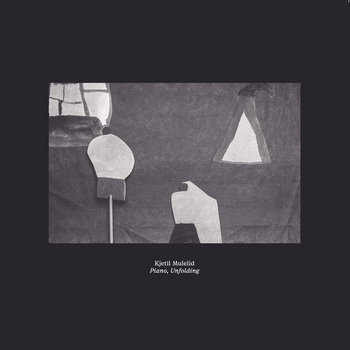
Kjetil Mulelid
“Piano, Unfolding”
(Sagene Records SR100)
Kjetil Mulelid – piano (Steinway C)
“Piano, Unfolding” is the second solo piano recording by the Norwegian pianist and composer Kjetil Mulelid. The first, simply titled “Piano”, was released on Rune Grammofon in 2021 and this very impressive work is favourably reviewed here;
https://www.thejazzmann.com/reviews/review/kjetil-mulelid-piano
Mulelid has been a regular presence on the Jazzmann web pages for more than a decade. He first came to my attention in 2013 as part of the Nordic trio Lauv (the group name is the Norwegian for “Leaf”), who released the highly promising EP “De Som Er Eldre Enn Voksne” in that year, the title translating as “Those Who Are Older Than Adults”. My review of the EP can be read here.
http://www.thejazzmann.com/reviews/review/de-som-er-eldre-enn-voksne/
The following year I enjoyed seeing Mulelid perform live at the 2014 Cheltenham Jazz Festival when he was one of the star soloists at the annual Trondheim Jazz Exchange event, which sees students from the Jazz courses at the Birmingham and Trondheim Conservatoires combining to make music together and presenting the results to the jazz going public. Mulelid was one of the outstanding performers at that event and I justifiably tipped him as a musician to look out for in the years ahead. It’s particularly satisfying to see him fulfilling that promise.
Now in his mid thirties Mulelid is a typical jazz musician of today, involved in a variety of genre defying projects embracing a broad range of musical influences.
Historically his main creative outlet has been his long running trio featuring drummer Andreas Winther and bassist Rune Nergaard, the latter the successor to previous incumbent Bjørn Marius Hegge. The trio’s albums “Not Nearly Enough To Buy A House” (2017), “What You Thought Was Home” (2019) and “Who Do You Love The Most?” (2022) are all reviewed elsewhere on this site.
Mulelid and former Lauv bassist Bardur Reinert Poulsen are also members of the instrumental quartet Wako, a group that also includes saxophonist Martin Myhre Olsen (who appeared at the Trondheim Jazz Exchange event in 2012) and drummer Simon Olderskog Albertsen. Initially Wako appeared to be primarily Olsen’s project and in the beginning he wrote all of the material for the group. However Wako’s recent repertoire has also begun to include Mulelid’s compositions. The group has released a total of five albums and has also collaborated with classical players from the ranks of the Oslo Strings.
Mulelid also collaborates with Olsen as part of the saxophonist’s MMO Ensemble, a jazz/classical quartet that also features vocalist Siril Malmedal Hauge and cellist Kaja Fjellberg Pettersen and which is inspired by the poetry of Emily Dickinson. Mulelid, Olsen and Hauge have also been part of the Norwegian sextet Wild Things Run Fast, a tribute to the music of Joni Mitchell.
Mulelid has also recorded two albums with vocalist Emilie Vasseljen Storaas under the group name Kjemilie.
Mulelid’s current projects include his duo with vocalist and songwriter Siril Malmedal Hauge with whom he has recorded the albums “Blues and Bells” (2023) and “I Remember Oranges” (2026). Of these “Blues and Bells” is reviewed here;
https://www.thejazzmann.com/reviews/review/siril-malmedal-hauge-and-kjetil-mulelid-blues-and-bell
Before recording as a duo Mulelid and Hauge previously worked together in the group Fieldfare, alongside Winther and Poulsen.
Prior to “Piano, Unfolding” Mulelid’s most recent album release was “Agoja”, recorded with an ensemble featuring a core quartet of Mulelid, Winther, Poulsen and pedal steel guitarist Lars Hontveth, together with a large cast of guests. Album review here;
https://www.thejazzmann.com/reviews/review/kjetil-mulelid-agoja
The pianist is also a member of Beiggja, something of a Norwegian ‘supergroup’ that also includes saxophonist Kika Sprangers, bassist Mats Eilertsen and drummer Per Oddvar Johansen. This line up has recorded an eponymous debut album which was released the Norwegian record label Hubro in 2025.
The idea for a solo piano album was first suggested to Mulelid by Rune Grammofon in 2018 but the pianist was initially sceptical, preferring to concentrate on working with his trio and with the numerous other groups with which he is involved. However with the onset of the Covid pandemic the idea increasingly began to appeal to him and the bulk of the material was written during the first period of lockdown. The album was then recorded over the course of a single day in June 2020 and released the following year.
“Piano” attracted considerable critical acclaim with Mulelid’s performance eliciting favourable comparisons with artists such as Keith Jarrett and Chick Corea. In particular parallels were drawn between “Piano” and Jarrett’s 1972 solo piano masterpiece “Facing You”, his debut album for ECM and a recording that focussed on relatively brief compositions rather than the long-form solo piano improvisations that distinguished Jarrett’s later output for the label.
In 2025 Mulelid was invited to record a second solo piano album at the Kabuso Art Centre in Øystese. His long-time collaborator Andreas Winther joined him as part of an engineering team that also includes Kyrre Laastad and Erik Nylander. Winther was present throughout the two day recording session and played a prominent role in the creative process. Kabuso boasts a beautiful setting, an exceptional acoustic and a magnificent Steinway C grand piano and the resultant album is very much in keeping with its predecessor, warm, intimate and with a strong focus on melody.
“Piano, Unfolding” features twelve new compositions, all of them relatively short and with no single item lasting longer than six minutes. The beautiful “Memorable Stories” sets Mulelid’s stall out, the flowing melodies exhibiting an almost hymn like quality. Mulelid was raised in the small Norwegian village of Hurdal and has been playing piano since the age of nine, initially inspired by the music of Chopin, Beethoven and Debussy. These formative influences can be detected throughout both of his solo piano recordings. He later developed an interest in jazz and subsequently obtained a bachelor degree in jazz performance from the NTNU in Trondheim before becoming a professional jazz musician.
“How the West Was Won” represents an almost perfect blend of structure, melody and improvisation and has evoked favourable comparisons with the music of Brad Mehldau. Flowing melodies are juxtaposed with more intense improvised passages within an intelligently constructed compositional framework.
“Entrance”, although rather incongruously placed third in the running order, offers another example of Mulelid’s melodic gift, and also combines moments of serenity with more rigorous improvised passages. Occasionally vocalised sounds reminiscent of those of Keith Jarrett can be heard deep in the mix. These are not in any way intrusive, but do reflect Mulelid’s deep immersion in his music.
“Entrance” may be so named as it segues almost imperceptibly into “Solskinnet”, a six minute piece that explores the full dynamic range of the piano with sounds ranging from flowing, lyrical melodies to classical style flourishes and even thunderous left hand figures. Overall the mood is melodic and optimistic but the piece does demonstrate Mulelid’s range as a pianist and a player with a remarkable left hand / right hand balance.
“You Know, I Know” expands around a memorable melodic motif. As a solo pianist Mulelid has cited the influence of artists such as Jarrett, Bill Evans, Tord Gustavsen, Paul Bley, Shai Maestro and Christian Wallumrod, and at various times elements of all of these can be discerned in his playing.
“Shards of Light (Krystaller)” combines appropriately crystalline passages with classical style harmonies in a performance that exhibits a quietly smouldering intensity.
Simple, folk like melodies are juxtaposed with more elaborate classical style ornamentation on “The Poem”, one of the album’s most beautiful pieces. Similar qualities inform the following “And Now”, which finds Mulelid switching from gently flowing melody to intense and rapturous improvisation on the turn of a dime. Although comparatively brief all of the compositions on this record pack a lot of musical information into their running time. Mulelid’s pieces are genuinely episodic, each piece a self contained musical adventure but still part of a wider, album length narrative.
There’s a wistful quality about the opening melody of “(the longing for a) Hello” that is thoroughly in keeping with its title, but we’re talking Kjetil Mulelid here and he’s soon expounding dramatically on that opening theme with a free flowing improvisation, complete with almost subliminal vocalisations. However a certain structural discipline remains and the piece concludes with a return to the gentle yearning of the opening passages.
“Encore” actually proves to be the penultimate track and again builds from apparently simple beginnings to embrace both lyrical melody and harmonic and rhythmic sophistication.
The album concludes with “Glitterind”, a gently reflective hymn like coda that also embraces an element of abstraction as Mulelid reaches under the lid to briefly explore extended techniques such as the strumming and dampening of the piano strings.
“Piano, Unfolded” is a worthy successor to the earlier “Piano” album and exhibits many of the same virtues. It finds Mulelid honing his approach to the solo piano format and once again sees the pianist establishing a good balance between the left and right hands, and between composition and improvisation.
In summary I can only repeat some of my observations from the previous record;
“Every piece represents a brilliantly realised performance, with each composition representing something more than a vignette or miniature, but still compact enough to ensure that it never overstays its welcome. It’s as if Mulelid has distilled himself and his emotions into these brilliant performances.
“Each piece is successful as a self contained entity and one can imagine any one of these tracks being very well received on BBC Radio 3 programmes such as Late Junction or Night Tracks. Mulelid’s melodic themes are simply gorgeous and his playing is superb throughout, with virtually zero recourse to flashiness or to extended techniques”.
“Although superficially beautiful these compositions and performances also exhibit considerable musical depth and subtlety and this is an album that can be enjoyed on a variety of levels”.
Solo piano recordings aren’t always easy to describe, especially when you have no real technical knowledge with regard to the music. I can only describe the emotional and aesthetic effect of the music upon me but hope that during the course of this review that I have done Mulelid and his music justice.
As I say this is a frequently beautiful album that has the potential to appeal to a large number of open minded listeners.
blog comments powered by Disqus