

by Ian Mann
August 03, 2026
/ ALBUM
Bainbridge’s writing within his self imposed framework is consistently intelligent and interesting and the often tensile music is well served by the unconventional instrumental line-up.
Luke Bainbridge
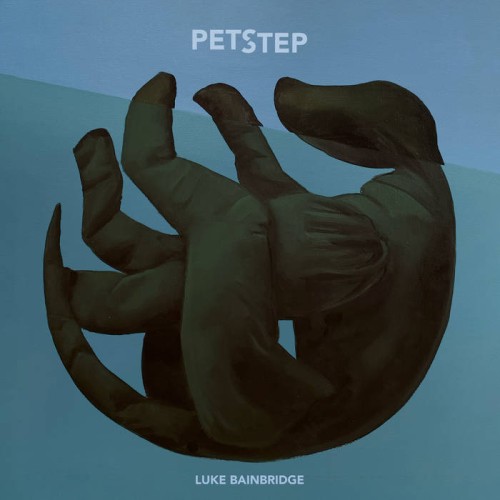
“Petstep”
(Crossing Styx Records CSX001CD)
Luke Bainbridge – drums, vocals, Kieran McLeod – trombone, Ralph Wyld – vibraphone, Huw V Williams – bass
“Petstep” is the second album from drummer and composer Luke Bainbridge, a follow up to his 2021 debut “Surface Tension”, which is reviewed here;
https://www.thejazzmann.com/reviews/review/luke-bainbridge-surface-tension
Bainbridge studied music at the University of Birmingham and ran his own piano trio in addition to performing with the University Big Band. He then studied for a further year at the University of Saskatoon in Canada, again drumming for the University Big Band and becoming involved with the local jazz scene.
In 2020 Bainbridge graduated with a Masters in Jazz Performance from the Royal Academy of Music in London. He also completed the LRAM (Licentiate of the Royal Academy of Music) teaching qualification, which has allowed him to undertake work as a music educator.
As a composer Bainbridge was the 2018 winner of the Dankworth Prize for Jazz Composition, awarded for his small band piece “Crossing Styx”,the work for which his record label is now named.
As a writer active in both the jazz and contemporary classical spheres he had previously been the winner of the 2017 Compass Composition Prize, presented in association with the Birmingham Contemporary Music Group (BCMG).
Bainbridge has been leading his own groups, often under the Surface Tension name, since 2017 and former band members include guitarist Billy Marrows, saxophonist Sam Norris, pianists Lukas DeRungs and Wilbur Whitta and bassists Harry Pearce and Seth Tackaberry.
In January 2018 Bainbridge, Norris, Whitta and Tackaberry recorded a three track EP “Sketches from Saskatoon”, which no longer appears to be commercially available.
Bainbridge appears on trumpeter Duncan Fraser’s septet album “Sketches of Manhattan”. Review here;
https://www.thejazzmann.com/reviews/review/duncan-fraser-septet-soundscapes-of-manhattan
He has also worked with guitarist Hannes Riepler, saxophonists Michael Chillingworth and Chip Wickham, vocalist Gaby Kettle, Canadian trumpeter Silas Friesen and the ensembles Hootini Brass Band, Rhythms of the City, Seven Steps Big Band, James Taylor Quartet, London Mozart Players and Sister Sally.
Bainbridge has also performed with the musical comedian Archie Henderson aka Jazz Emu.
“Petstep” features the same quartet that appeared on “Surface Tension”, with Bainbridge joined by trombonist Kieran McLeod, vibraphonist Ralph Wyld and bassist Huw V Williams. It was recorded in July 2024 at Lightship 95 Studio in London with David Holmes engineering and subsequently co-producing the album with Bainbridge and McLeod.
Bainbridge’s range of influences are eclectic to say the least, ranging through Bela Bartok, Gustav Holst, Morton Feldman and particularly Oliver Messiaen through to James Brown, Rage Against The Machine, J Dilla, and MF Doom via Charles Mingus and Eric Dolphy.
Bainbridge describes this latest recording as his “difficult second album”. The music was written in response to sometimes difficult personal circumstances, among them the death of a much loved family pet and the transition from student life to full adulthood.
Astute readers may have noticed that the title of the album is a palindrome and the concept of the palindrome informs Bainbridge’s writing for this recording. “The concept inspired many rhythmic games and creative constraints”, Bainbridge explains, adding “this took me out of my comfort zone as a drummer and composer, yet offered a structural solace to explore my creativity over a long period of change and uncertainty. Despite its palindromic structure the music actually draws energy from the dynamic relationship between symmetry and asymmetry, order and chaos. And whilst the album aims to express the turbulence of the time in which it was written, there are many brilliant things that remained constant throughout the process. Playing the drums and being creative is where I am most happy and this project has allowed me to embrace that joy”.
The leader’s drums introduce opener “Hell’s Stairwell”, gradually joined by electric bass, vibes and trombone. Bainbridge remains a driving force throughout, combining effectively with Williams’ supple electric bass lines, with the latter also featuring as a soloist. McLeod subsequently stretches out with an expansive and exciting trombone solo, fluent and expressive and really upping the energy levels, aided by the leader’s increasingly frenetic drumming. Wyld’s vibes variously shimmer and clank, woven into the instrumental fabric of this unusually configured quartet.
Title track “Petstep” features the impressive Wyld as a soloist but, again it’s the leader’s restless drumming that shapes and steers the music as Wyld’s mallets dance on the bars. With McLeod temporarily sitting out I was reminded of the music of the Cloudmakers Trio, featuring vibraphonist Jim Hart, bassist Michael Janisch and drummer Dave Smith. The trombonist eventually returns to deliver his own solo, delivered with the usual combination of skill and inventive exuberance. McLeod has featured intermittently on the Jazzmann web pages since his student days at the Royal Academy of Music and has since developed into one of the stalwarts of UK jazz, an unsung hero of the music whose profile is arguably less prominent than it deserves to be.
“Petstep” doesn’t sound as if it was written in response to the passing of Olive, the family dog, although apparently it was. Initially the following “Hair of the Dog” sounds more obviously like a lament with lugubrious bass and trombone contrasting with the sounds of twinkling vibes and brushed drums. I felt that I detected something of a Mingus like quality about the music here, particularly before it veers into more obviously improvised ‘free jazz’ territory with Bainbridge’s drum kit coming increasingly to the fore, essentially a drum solo shadowed by, and eventually responded to, by the other musicians. Wyld and McLeod both deliver solos of their own as the music lightens in terms of mood and accelerates in terms of pace. There’s also a brief, bass led, instrumental coda.
Bainbridge makes his vocal debut as he raps on “Spillage in the Village”, the story of a home brewing disaster experienced by his father during the Covid period. Although doubtless true it’s a tale that even Bainbridge describes as “absurd” as he weaves musical and cultural references into his rap. The words are reproduced on the album sleeve and despite their self acknowledged silliness they are genuinely witty and inventive. Bainbridge also raps in an English accent, which makes the words easier to follow. Musically the piece is powered by a relentless drum and bass groove with brief instrumental solos for trombone and vibes, plus a bass / drum dialogue. I have to admit that rap and hip hop don’t normally form a big part of my musical agenda but I did enjoy this.
There’s a change of mood with “It’ll Pass”, introduced by the angelic twinkling of Wyld’s vibes and featuring a liquidly melodic electric bass passage from Williams. McLeod’s trombone sound is rich and rounded on this hymn like tune as he shares the solos with the bassist. Bainbridge maintains a relatively low profile, largely content to play the role of colourist.
The interlocking grooves and motifs of “Septstep” help to fuel solos by McLeod and Wyld as Bainbridge and Williams combine to keep the pot bubbling.
The album concludes with the valedictory “Well Farewell” with a gently percolating groove framing the solos of McLeod and Wyld as the music gradually gathers momentum, with the leader’s drumming becoming increasingly busy and assertive.
For a ‘difficult second album’ “Petstep” represents a pretty impressive piece of work. Bainbridge’s writing within his self imposed framework is consistently intelligent and interesting and the often tensile music is well served by the unconventional instrumental line-up, with the vibes in particular representing a source of both rhythm and melody. All four musicians play well individually and also as part of a well balanced and well established unit. Bainbridge’s diversion into rap on “Spillage in the Village” may be a bit of an indulgence, but it’s ultimately a clever, engaging and entertaining one.
“Petstep” builds on the strengths of the earlier “Surface Tension” as Bainbridge as his colleagues rise to the “difficult second album challenge” with considerable aplomb.
Both albums by Luke Bainbridge are available via his Bandcamp page here;
https://lukebainbridge.bandcamp.com/music
blog comments powered by Disqus