

by Ian Mann
March 12, 2026
/ ALBUM
Maestro’s sense of adventure and his willingness to embrace a variety of musical styles is something to be celebrated. Overall “The Guesthouse” represents a brave and distinctive artistic statement.
Shai Maestro
“The Guesthouse”
(Naive Records BLV(177)
Shai Maestro – piano, keyboards
with;
Jorge Roeder – bass, Gadi Lehavi – keyboards, Ofri Nehemya – drums, Immanuel Wilkins – saxophone, Philip Dizack – trumpet, Fernando Brox – flute, Nitzan Bar, Tal Mashiac – guitars, MARO, Michael Mayo, Alon Lotringer – vocals, Jake Sherman – Hammond organ, Manuel Cantarote, Juan Diego Valencia – palmas
“The Guesthouse” is the eighth album from The Israeli pianist and composer Shai Maestro (born 1987). He is currently based in Spain after spending a decade living and working in New York City where he collaborated with such musicians as saxophonists Mark Turner, Oded Tzur and Ben Wendel, bassists Larry Grenadier and Noam Wiesenburg, drummers Jeff Ballard, Ari Hoenig and Nasheet Waits, vibraphonist Joel Ross and vocalists Gretchen Parlato, Michael Mayo and Theo Beckmann. He has also worked with the Chilean guitarist, vocalist and songwriter Camila Meza.
I first heard his playing at the 2018 EFG London Jazz Festival when he appeared at The Barbican as part of a trio led by his fellow Israeli, bassist and composer Avishai Cohen. That event proved to be one of the highlights of the entire Festival and one of the best shows that I have ever seen at the Barbican venue. Review as part of my Festival coverage here;
https://www.thejazzmann.com/features/article/efg-london-jazz-festival-day-nine-saturday-24th-november-2018
At the 2024 EFG LJF I enjoyed a performance by Maestro’s own trio, featuring drummer Ofri Nehemya and bassist Orlando Le Fleming at Ronnie Scott’s. Again it was a superb performance with the trio playing a selection of pieces from Maestro’s two albums for the ECM record label, The Dream Thief” (2018) and “Human” (2021). In addition to enjoying some superb music, in which the art of improvisation played a key role, I was also lucky enough to be able to talk with Orlando Le Fleming after the show, which helped to make the event even more memorable. Review as part of my Festival coverage here;
https://www.thejazzmann.com/features/article/efg-london-jazz-festival-2024-thursday-21-11-2024
The majority of Maestro’s albums have been recorded in the standard ‘piano trio’ format although “The Stone Skipper” (2016) featured several appearances by illustrious guests. His second ECM album “Human” saw the trio of Maestro, bassist Jorge Roeder and drummer Nehemya expanded to a quartet with the addition of trumpeter Philip Dizack. Meanwhile “Miniatures & Tales” his debut recording for the Paris based independent Naive Records, is a solo piano recording.
With regard to the trio recordings bassist Roeder has been a constant factor during Maestro’s career. Meanwhile Nehemya took over the drum chair from Ziv Ravitz at the time of Maestro’s move to ECM.
In addition to his work in a jazz context Maestro has also composed orchestral works and has written for the cinema. He has also collaborated with Afro-Cuban musicians and with flamenco musicians, with something of that flamenco influence feeding into this current recording.
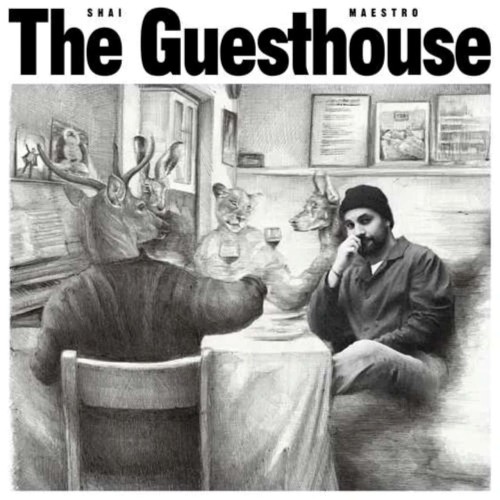
“The Guest House” represents a considerable departure from Maestro’s previous work and represents his most ambitious project to date. Based on the poem “The Guesthouse” by the great Persian poet Rumi (1207-73) the album is a semi-conceptual work, a kind of song cycle that mixes many different musical styles and idioms. Shani Nitzan’s distinctive artwork, inspired by Rumi’s poem, also forms an important part of both the overall concept and the album package.
Like so many recordings of recent times “The Guest House” is partially a product of lockdown. Maestro spent much of that period learning the art of music production and experimenting with electric keyboards. This latest recording features him performing on both acoustic and electric instruments in the company of a cast of international collaborators.
Indeed the overall theme of the album is “collaboration, inclusion and the essence of welcoming – the essence of an open door”. It represents Maestro’s riposte to the polarisation of the modern world and the “discriminative definition of ‘us’ and ‘them’.”
Contemporary musical technology has enabled these international collaborations to happen and the music was recorded in multiple locations in France, Spain, Portugal, Sweden and the USA with producer, composer and arranger Maestro bringing it all together with the help of a host of recording engineers. Post production plays an important role with regard to the finished product, as does the use of unusual microphone placements with regard to the piano.
The album commences with the instrumental composition “The Time Bender”, played by the core quartet of Maestro, Roeder, Nehemya and second keyboard player Gadi Lehavi. Mixing jazz, folk and even prog rock influences the place evokes a wistful sense of nostalgia and incorporates more than one solo piano episode. Along the way we encounter a bewildering variety of twists and turns as the music shifts regularly in terms of mood, style and dynamics and also experiments with unusual time signatures (17/8). Maestro’s newly acquired production skills are put to good use as the piece skilfully blends acoustic and electric sounds with all of the musicians making substantial and distinctive contributions.
An innovative and very contemporary instrumental arrangement of Eden Ahbez’s “Nature Boy” features a similar mix of acoustic and electric sounds with Maestro acting as producer as well as pianist and keyboard player. Roeder features again and the personnel on this track also features saxophonist Immanuel Wilkins, trumpeter Philip Dizack and flautist Fernando Brox. Concise solos come from Maestro and Roeder while Wilkins is allowed to stretch out more expansively. Manuel Cantarote and Juan Diego Valencia, both credited with ‘palmas’, bring something of a flamenco feel to the music, not in a particularly obvious or overt fashion but as part of an intriguing electro-acoustic sound mix.
This album also sees Maestro writing lyrics for the first time, reluctantly at first but with greater confidence one he had decided upon the vocalists who were to sing them. MARO sings “Gloria”, a song dedicated to Maestro’s partner. It’s a duo performance for voice and piano only and features MARO delivering the pianist’s evocative and poetic words in addition to adding fluent passages of wordless vocalising, with traditional Israeli folk music again representing an influence. This piece also appeared as a solo piano performance on the “Miniatures & Tales” recording.
The palmas specialists return to add more of a flamenco flavour to the lively instrumental “Moon of Knives”, which also features the core quartet plus guitarist Nitzan Bar. Piano, electric keyboards and guitar are featured as the music combines its folk and flamenco influences with the sounds of prog rock.
“Strange Magic” is a second duo performance, this featuring the combination of Michael Mayo’s vocals and Maestro’s electric keyboards. Maestro appeared on the singer’s 2024 album “Fly”, here Mayo repays the compliment. “Strange Magic” is a ‘story song’, the narrative beautifully sung by the soulful voice of Mayo with the sound of electric keys representing both an effective foil and an effective contrast to the warmth of Mayo’s honeyed vocals.
There’s another duet on “Refuge”, this time between Maestro on acoustic piano and Jake Sherman on Hammond organ. It’s a delightfully lyrical piece with something of a gospel tinge, the intimate duo performance enhancing its beauty.
The next two pieces feature the core quartet only, a unit that Maestro has been featuring on live performances, the addition of a second keyboard player having become a necessity following Maestro’s recent adoption of electric keyboards and wider musical technology.
“GG’s Metamorphosis” initially embraces a kind of woozy lyricism and has an almost child like quality about it. The delicate interplay between the two sets of keyboards is complemented by subtle martial rhythms, the music gradually gathering momentum as the piece progresses. The sound then becomes more obviously ‘proggy’ with searing synthesiser added to the various piano sounds. There’s also a dazzling acoustic piano solo from the leader before the tension is released and the quartet winds down once more.
“Sleepwalking Roses” also begins gently with Roeder’s melodic bass featuring alongside the twin keyboards and the shimmer of Nehemya’s cymbals. The bassist lays a vital role in the success of the album as a whole. Elsewhere Maestro solos lyrically on acoustic piano while the dialogue between the two keyboard players also continues to beguile the listener.
“A Little Thank You Note” features Maestro in dialogue with guitarist Tal Mashiac, although it’s the pianist that has the most to say in this particular conversation.
“The Lion and Me” is the final piece to feature lyrics, these co-written by Maestro and vocalist Alon Lotringer. The words are delivered by Lotringer’s fragile, high register voice, accompanied by the sounds of the leader’s acoustic piano and Roeder’s bowed bass.
The album concludes with Maestro solo at “The Guesthouse Old Piano”. It’s a short solo piano performance that sounds suitably evocative with regard to the tune’s title, a neat postscript and a nice way to round off this intriguing and highly varied album.
Having only previously witnessed Maestro in a conventional jazz piano trio setting I wasn’t quite sure what to make of “The Guesthouse” at first. It certainly represents a considerable departure from his previous work and the recording hasn’t always been particularly well received. However it’s an album that I’ve come to appreciate more and more with subsequent listenings. Maestro’s sense of adventure and his willingness to embrace a variety of musical styles is something to be celebrated, as is that spirit of “collaboration, inclusion and the essence of welcoming” that informs the entire project. All of the numerous contributors perform well and Maestro also impresses on his first outing as a lyricist, inspired by such songwriters as Paul Simon and James Taylor.
Overall “The Guesthouse” represents a brave and distinctive artistic statement. It will be interesting to see which direction Maestro decides to take next.
blog comments powered by Disqus