

by Ian Mann
November 12, 2026
/ ALBUM
An impressive debut from Pillinger. His skill as a drummer & his command of various rhythms is apparent throughout & his playing is at the heart of the music. He also impresses as a composer.
Miles Pillinger
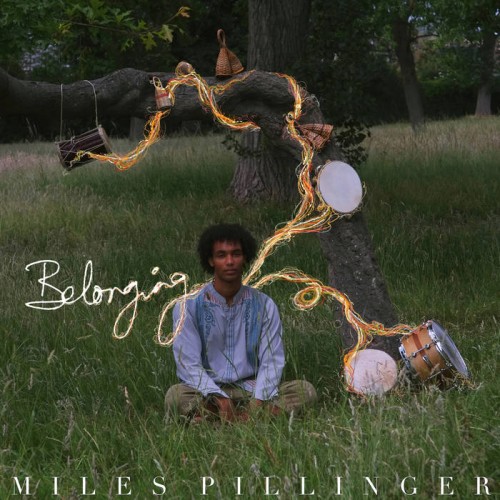
“Belonging”
(Miles Pillinger Music – Distributed by ECN Music / Proper Music)
Miles Pillinger – drums, Olivia Cuttill – trumpet, Benjy Sandler – soprano, alto & tenor sax, flute, Tom Harris – piano, Josh Vadiveloo – bass
with guests;
Helen Pillinger – tenor saxophone, Thandanani Gumede – vocals, Emma Marsh – percussion
“Belonging” is the debut album from the young Manchester born drummer and composer Miles Pillinger. Aged twenty four Pillinger is a graduate of The Jazz Course at Leeds Conservatoire and released his first recording, the very promising EP “Sunrise”, in 2023.
Pillinger is a member of the National Youth Jazz Orchestra and is currently part of NYJO’s new Blueprint Orchestra project.
Others with whom he has worked include trumpeter Olivia Cuttill, pianist Nikki Yeoh, multi reeds player Chip Wickham and vocalists Tara Lily and Mica Miller.
I first heard Pillinger play as recently as September 2026 when he was part of the quartet that Cuttill brought to the annual Wall2Wall Jazz Festival in Abergavenny, presented by Black Mountain Jazz Club. The Cuttill Quartet paid homage to the 1964 recording “Oscar Peterson Trio + One”, the ‘one’ in question being the late, great trumpeter Clark Terry (1920 – 2015). This was a recording hat had a profound influence on Cuttill and her group’s tribute was both richly entertaining and superbly played. After the show I enjoyed conversations with both Olivia and Miles and I was genuinely excited when a review copy of “Belonging”, which was released on October 23rd 2026, subsequently turned up in the post. My review of the Cuttill Quartet’s Abergavenny performance can be found here;
https://www.thejazzmann.com/features/article/saturday-at-wall2wall-jazz-festival-melville-centre-abergavenny-26-09-2026
In 2025 Pillinger was the recipient of the Peter Whittingham Award for Jazz which is presented by the Help Musicians organisation. As it has done for numerous previous recipients the Whittingham Award has helped to finance the recording of Pillinger’s debut album.
“Belonging” features a core quintet with Pillinger and Cuttill joined by Benjy Sandler (reeds), Tom Harris (piano) and Josh Vadiveloo (bass). Pillinger was born into a musical family and his mother, Helen, guests on one track playing tenor saxophone. Vocalist Thandanani Gumede appears on another while percussionist Emma Marsh guests on two tracks.
Pillinger spent time travelling and studying in Brazil and the music on his debut reflects both Brazilian and South African influences. Inspirational figures for Pillinger include the Brazilian vocalist Joyce Moreno, Brazilian multi-instrumentalist and composer Hermeto Pascoal and the South African cellist Abel Selaocoe.
Other sources of inspiration and influence include saxophonist Pharaoh Sanders, pianist Chick Corea and drummer / composers Brian Blade, Max Roach and Elvin Jones.
“Belonging” was recorded over the course of two days in March 2026 at The Nave recording studios in Pudsey, Yorkshire by producer and mixing engineer Ben MacDonald. The album was subsequently mastered by Chris Sharkey.
Astute readers will have noted that “Belonging” is also the title of a classic ECM album by Keith Jarrett’s ‘European’ Quartet but Pillinger explains his choice of album title thus;
“My whole life I’ve often felt like an outsider,” says Pillinger. “Rather than focusing on that, I wanted to celebrate what makes each of us different and the people and experiences that make us who we are. This album is about belonging – not fitting in but finding joy in what makes you uniquely yourself.”
Album opener “Olinda Meu Amor” was inspired by Pillinger’s time in Brazil and more specifically by the music, dance and culture of Olinda and Recife, two cities in the state of Pernambuco in the north east of the country. Fuelled by infectious frevo rhythms the piece has a real carnival atmosphere with Pillinger augmenting his kit with various items of percussion. The whimsical breakdown mid tune seems to owe something to Pascoal, but we’re soon up and running again with Sandler on soprano and Cuttill on trumpet both soloing fluently and incisively above the bustling rhythms. Meanwhile Harris demonstrates his command of Brazilian piano styles with his own solo. It all makes for a bright and exciting start with the leader’s drums and percussion right at the heart of the performance.
“I’m Not Serious” sees Pillinger welcoming percussive reinforcements in the shape of Emma Marsh and the piece is introduced by an extended drum and percussion workout. There’s more of an Afro-Cuban feel to this piece which sees Sandler featuring on flute. Cuttill emerges as the first featured soloist, playing with her usual verve and precision. Harris further proves his versatility with an effusive and percussive piano solo. Elsewhere vibrant rhythms combine with simple but joyous melodies as Pillinger and his colleagues keep the energy levels up.
The title of Elvin’s Beat” celebrates the great Elvin Jones and steers the music into more obvious jazz territory. An introductory horn fanfare underpinned by Pillinger’s mallet rumbles leads to a Vadiveloo bass vamp that sets the scene for the rest of the piece. The leader’s martial rhythms and press rolls dictate the pace of the hard bop flavoured theme, which acts as the launch pad for powerful and expansive solos from Cuttill on trumpet and Sandler on tenor.
The title of “Mysterious Meat” is a reference to the difficulties Pillinger experienced travelling as a vegetarian in Brazil. Again jazz is the predominate ingredient, flavoured with a pleasing element of whimsy that is reflective of the humour in the title. Harris is the first featured soloist as the group temporarily enters into piano trio mode, with Harris embracing a wilful Keith Tippett like dissonance as the music flirts with the avant garde. Sandler then takes over on tenor, probing powerfully above the rolling rhythmic backdrop generated by Vadiveloo and Pillinger, with the leader’s drums a particularly significant component in the music. After a passage in saxophone trio mode Harris begins to offer commentary from the piano, some of his phrases sharp and jagged as he remains in ‘Tippett territory’. The overall feel of this piece is of a kind of ‘musical black comedy’, with the spirit of Charles Mingus also casting a shadow (in a good way) on the proceedings.
By way of contrast “Beryl” is a beautiful ballad dedicated to Pillinger’s grandmother. Helen Pillinger plays tender tenor sax on this one, eventually combining with Cuttill’s muted trumpet. The overall mood is soft and fragile, very different to the four pieces that have preceded it. Harris adds a lyrical piano solo while Miles’ delicate brushwork offers subtle and gentle rhythmic direction.
Introduced by Harris at the piano the title track features the dramatic English language vocals of South African born, UK based guest singer Thandanani Gumede. The positive message of the lyrics is complemented by Township jazz and gospel flavourings, both vocal and instrumental. It’s a particularly powerful vocal performance from Gumede, who receives excellent support from the musicians, with Sandler again featuring on flute.
“Momentary Peace” is named for “the brief sense of fulfilment that follows hard work and achievement”. Ushered in by Harris’ piano motif it’s a joyous piece with Sandler’s soprano sax dancing lithely over the infectious Afro-Caribbean rhythms. The saxophonist also combines effectively with Cuttill to deliver the tune’s catchy hook. Harris delivers a dazzling piano solo and there’s even something resembling a drum feature from the leader. Apparently this track’s happy vibe won it a lot of airplay on the One Jazz radio station over the summer.
The final two tracks are thematically linked and were apparently written during a challenging period in Pillinger’s life. They are said to reflect on “uncertainty, resilience and personal growth”.
Not that there’s any uncertainty about the music. The first piece to be presented “My Other Other Side” is bold and upbeat, with Pillinger’s drums augmented by the patter of Marsh’s percussion. The horns play a particularly significant role, combining powerfully and brightly on a piece whose overall mood feels celebratory. Pillinger and Marsh also link up for an exciting drum and percussion feature.
The concluding “My Other Side” is generally more reflective and is ushered in by Vadiveloo at the bass. Harris’ piano motif then shapes the way, with Pillinger deftly deploying brushes in the early stages as Sandler features on flute. With its subtle South African flavourings the music is quietly uplifting, with Cuttill delivering a fluent, warm toned trumpet solo. Sandler follows on flute and Vadiveloo enjoys his first solo of the set on double bass. Pillinger largely keeps a low profile, well it is his ‘other side’.
Facetiousness aside this really is an impressive debut from Pillinger. His skill as a drummer and his command of various rhythms is apparent throughout and his playing is at the heart of the music, but without being overly flashy or overpowering.
As a composer he impresses by investigating a variety of musical styles and doing so very convincingly. His writing embraces wit and warmth and can be both highly sophisticated and disarmingly simple. He is well served by an excellent core quintet and also by his guests, who all make significant contributions. MacDonald and Sharkey also play their part too. Some commentators have suggested that Pillinger’s approach is a bit too scattershot, but to these ears the album’s variety of styles is one of its strengths. All in all “Belonging” represents a very promising debut and on its own terms is a total success.
October saw Pillinger play a couple of live shows in Cambridge and London. I’d love to see this music performed live myself and would be delighted to see Pillinger bring his own band to Black Mountain Jazz at some point in the future.
blog comments powered by Disqus